
Atlanta, Georgia | February 20, 2026
Story and Photos by Joëlle Walls
STEM learning doesn’t just take place in formal classroom settings. K-12 students have opportunities to grow their curiosities through hands-on activities after school, on weekends, and throughout the summer months, which are collectively known as out-of-school learning (OSL). Research shows that these OSL STEM programs can help strengthen students’ interest in STEM careers, reinforce STEM concepts introduced during the school day, and create positive, engaging learning opportunities for young people.
At Georgia Tech, this broader view of when and where learning happens aligns with the College of Lifetime Learning’s Strategy 2035—expanding access, supporting communities, and building practical, research‑informed pathways for educators and learners across the lifespan.
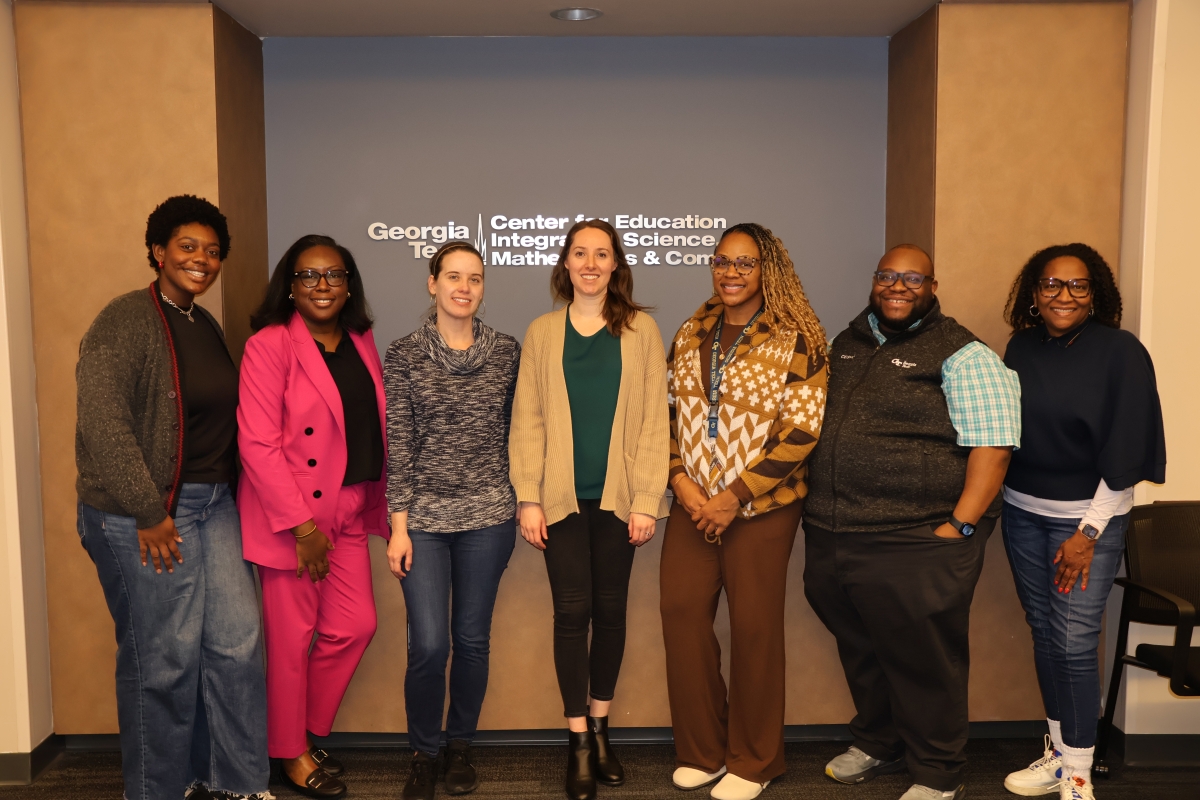
In fact, a collaborative effort is underway to better support the OSL educators who make these learning experiences possible. Through a National Science Foundation (NSF) grant, the College’s Center for Education Integrating Science, Mathematics, and Computing (CEISMC) has partnered with the Georgia Statewide Afterschool Network (GSAN) to engage OSL educators directly, learn about their experiences, and identify the professional learning and resources that would be most helpful across all out-of-school time (OST) settings.
“When we think about STEM in an out-of-school time context, it can be very challenging for some practitioners,” explained Sirocus Barnes, CEISMC’s director of Expanded Learning Programs and principal investigator on the grant. “The professionals who make up this ecosystem come to the work in different ways. Many may not have STEM experiences, yet they’re asked to lead STEM activities and encouraged to do so. I’ve noticed a gap between what’s expected of these practitioners and the supports available to them.”
As a one-year planning award from NSF’s Advancing Informal STEM Learning program, the work centers on partnership building and a needs assessment, involving focus groups and site visits across Georgia. This groundwork will inform a shared action plan to better support the state’s out-of-school STEM educator workforce, including exploring the feasibility of a future STEM certification offered through the College.
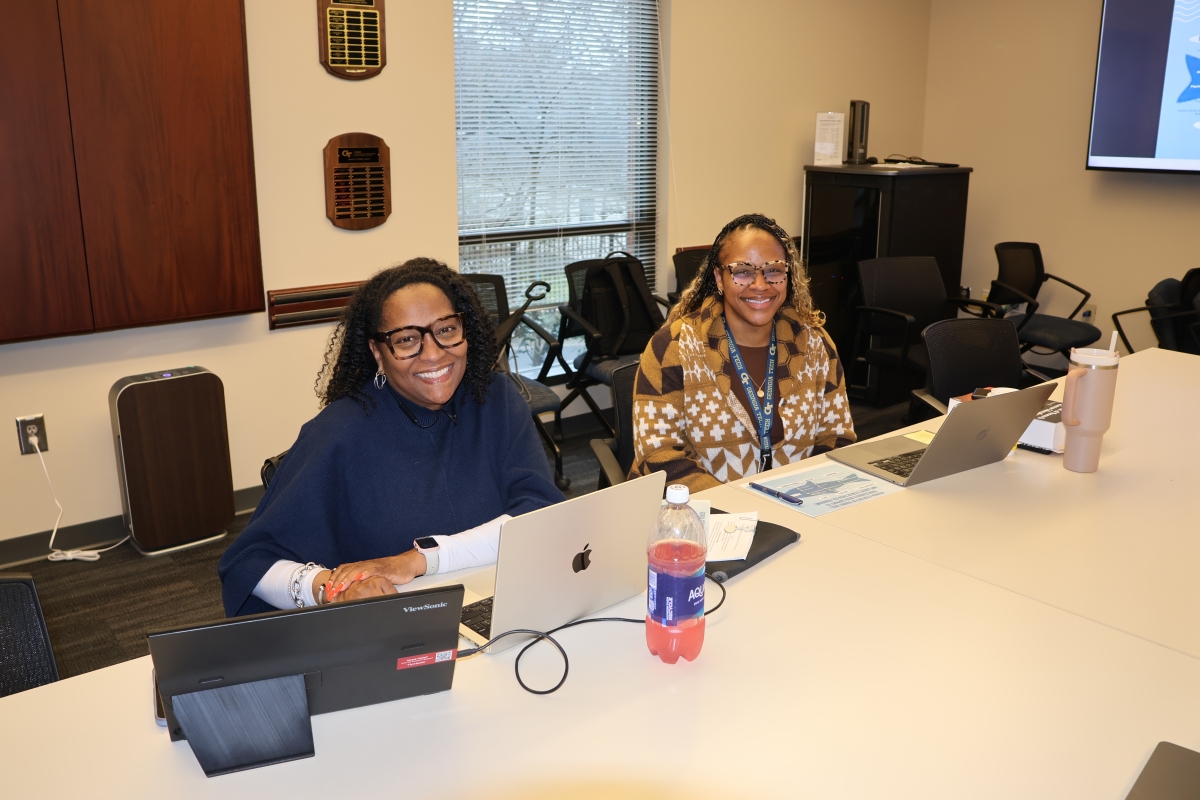
Co-principal investigator Katherine King said that the team is using a participatory action research model to ensure that the direction of the project is guided by the expertise of OSL educators.
“We spent the first semester of our work really being intentional about relationship building and forming this partnership,” said King, a research associate in CEISMC’s Educational Research and Evaluation group. “We documented our own assumptions so we could set them aside and genuinely listen to what STEM out-of-school professionals say they need. We wanted a framework that valued everyone’s expertise equally and created the conditions for a meaningful collaboration.”
King added that the research approach requires close attention to context. “When you enter as a researcher in the out-of-school space, the structural pieces are so different depending on the context, and you have to really pay attention to that,” she said. “It creates a really rich research experience where you’re attending to what the space looks like, what the staffing looks like, and what the goals are for the program. When you go into an out-of-school learning space, the learning goals are set with a bit more flexibility and breadth.”
A key partner of this collaboration is the Georgia Statewide Afterschool Network (GSAN), a public-private collaborative whose mission is to advance, connect, and support high-quality afterschool and summer learning programs to promote the success of children and youth throughout Georgia.
“In terms of scale, GSAN connects with hundreds of educators working in afterschool, summer, and community-based programs across Georgia, in rural, suburban, and urban communities,” said Patrice Holt, GSAN’s quality manager, whose role bridges the gap between policy, research, and practice. “While STEM is recognized as an important part of out-of-school programming in Georgia, there aren’t statewide STEM quality standards specific to OSL. That gap makes targeted professional development and shared guidance even more important for supporting educators across the state.”
That need is one reason GSAN’s long-standing partnership with CEISMC’s Expanded Learning Programs has become an important foundation for this work. The organizations have collaborated on STEM professional learning opportunities for OSL educators, including workshops, a bi-monthly professional learning community, and ongoing resource sharing through GSAN’s statewide network.
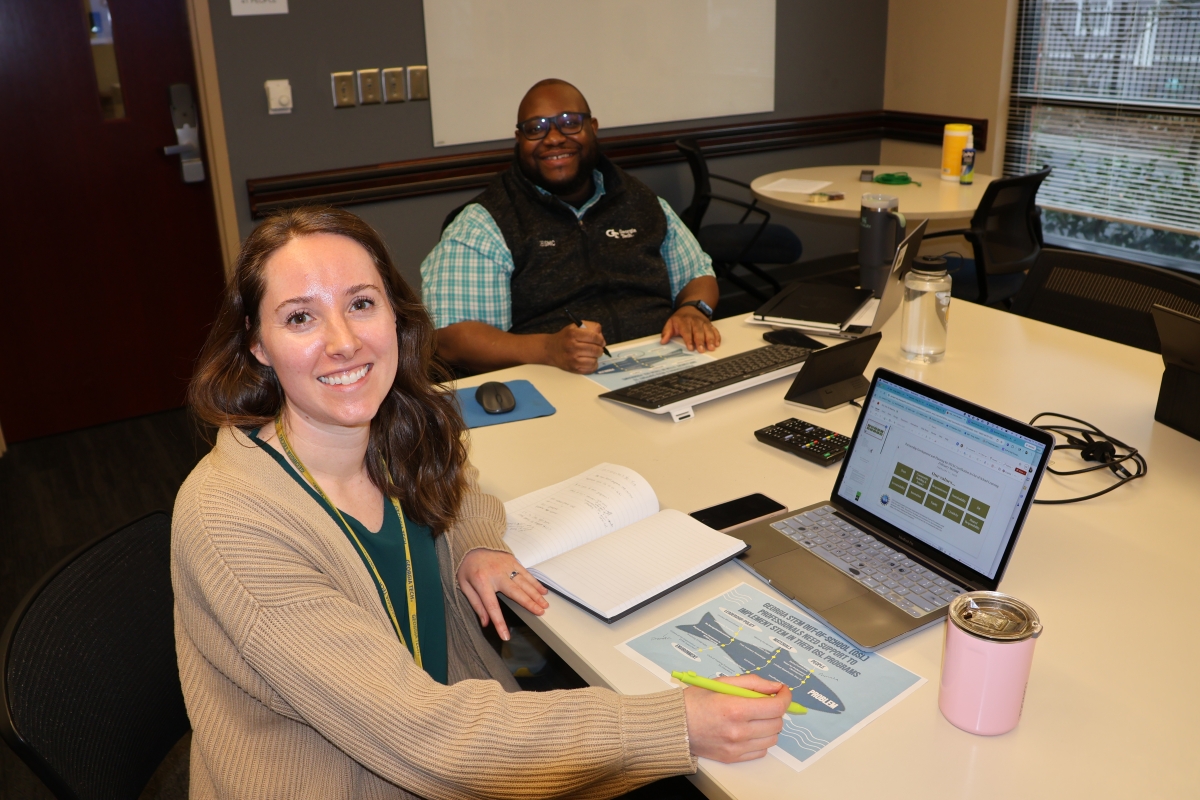
“What’s exciting about this phase is that it deepens that work by taking a research-practice partnership approach,” Holt explained. “This opens the door to more meaningful, sustainable supports, such as shared frameworks, professional learning pathways, and tools that are grounded in real practice and informed by research. It also positions this partnership to have a broader impact, helping to strengthen STEM learning opportunities for young people across Georgia.”
This collaboration also resonates with a core principle Barnes returns to often in his work: learning doesn’t begin and end with the school day. “When it comes to formal education, that’s only a short window of one’s ability to learn,” he said. “Out-of-school time and summer learning are additional times for learning to take place. If we’re able to support the adult learners in these settings, they’re going to be better equipped to support the young people who attend their programs.”
